
AI Data Readiness FAQs
AI data readiness is the process of making enterprise data visible, accessible, relevant, trusted, governed, and usable for AI initiatives. For unstructured data, this means understanding what data exists, where it resides, how it is used, who owns it, whether it has value, and whether it is appropriate for GenAI, RAG, analytics, or model training.
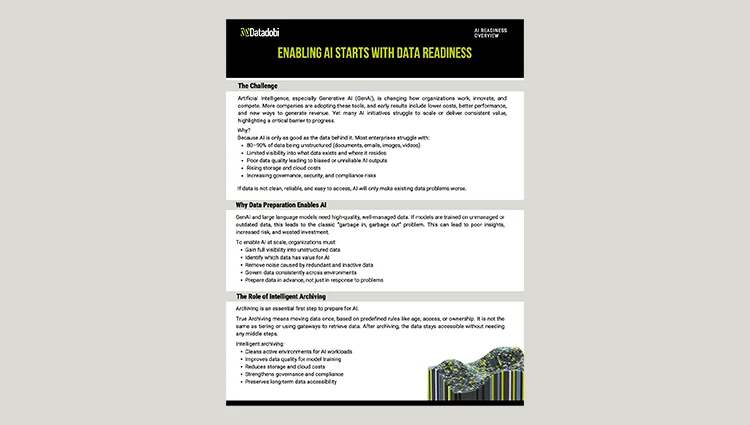
Business AI readiness determines whether an organization can move from AI experimentation to measurable value. If data is unmanaged, stale, redundant, inaccessible, or poorly governed, AI projects can produce unreliable outputs, increase risk, and waste investment.
An AI readiness framework gives teams a practical way to assess and prepare data before it enters AI workflows. For unstructured data, that framework should include discovery, metadata analysis, value identification, tagging, governance, data mobility, archiving, protection, and reporting.
Dark data is information an organization stores but rarely uses or understands. It may include documents, images, audio, video, emails, logs, and other unstructured content. Some dark data has major AI value, while other data may be redundant, outdated, risky, or too noisy to use.
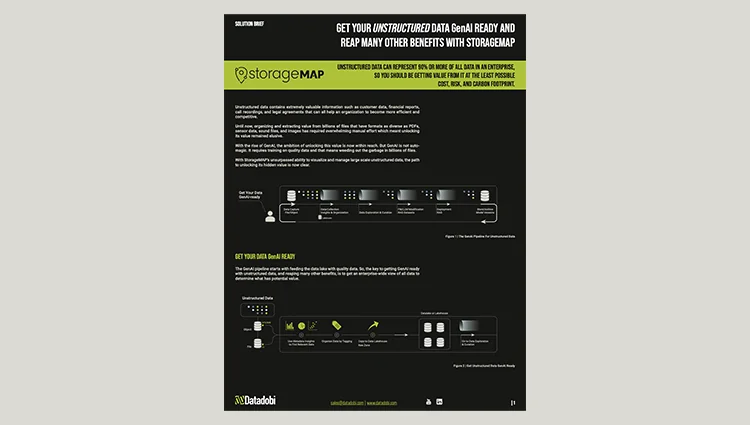
StorageMAP helps organizations build a clearer GenAI data pipeline by identifying valuable unstructured data, organizing it with metadata and tags, and copying selected data to a data lake or lakehouse for exploration and curation. It also supports data movement across on-premises, cloud, and hybrid environments.
Archiving helps clean active environments before data is used for AI. By moving inactive, redundant, or low-value data out of the way, organizations can reduce noise, improve data quality, lower storage and cloud costs, and preserve long-term accessibility for future use.
StorageMAP helps reduce AI risk by improving visibility, governance, auditability, and control across the unstructured data lifecycle. Teams can better understand which data is appropriate for AI use, which data should be protected or archived, and how datasets move through AI pipelines.
Need to improve AI data readiness before scaling GenAI? Datadobi can help you discover hidden unstructured data, identify what has value, and move governed datasets into AI workflows with confidence.