


Benefits of Data Migration: From IT Task to Strategic Advantage
Rethinking Data Migration: From Technical Task to Strategic Advantage
For decades, data migration has been viewed as a standard IT process: moving data from one storage environment to another to support infrastructure upgrades, cloud adoption, cost reduction, compliance, and other business requirements.
The priority has traditionally been straightforward: move the data accurately and with as little disruption as possible. But as unstructured data volumes grow and IT environments become more fragmented, the data migration process has become more complex and also more consequential.
Today, effective migration depends on understanding what data exists, where it resides, how it is being used, and what value or risk it carries before deciding what should move. Without that insight, organizations can carry data sprawl into a new environment, increase storage costs, and miss opportunities to improve governance, performance, and business outcomes.
That shift in thinking reveals some of the most important benefits of data migration: not simply relocating information, but using the move as an opportunity to create a more useful, efficient, and manageable data estate.
Meet the New Standard: Intelligent Migration
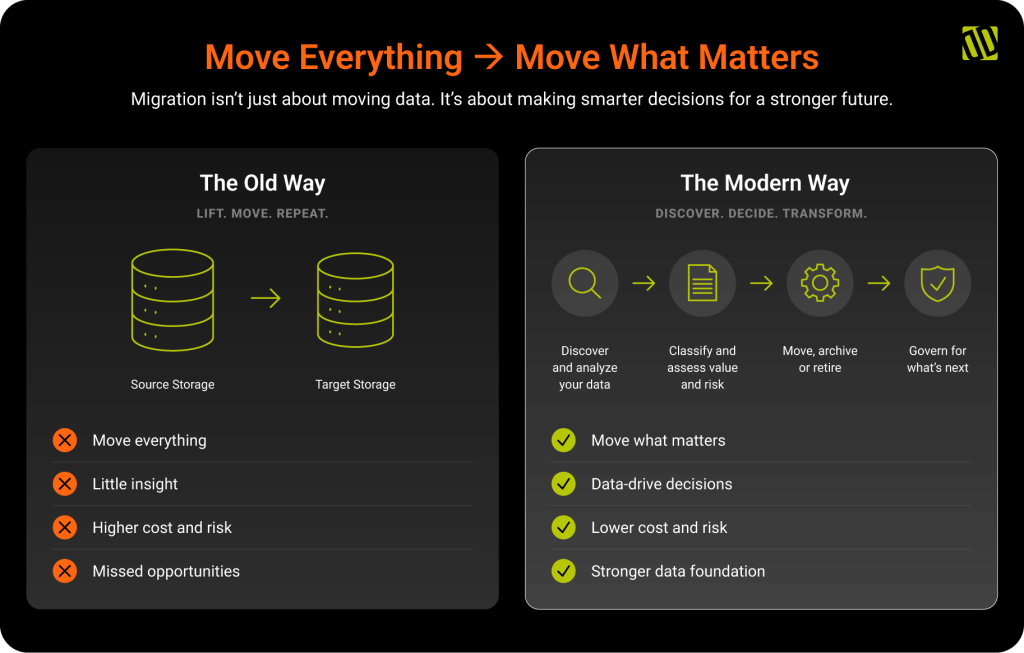
Modern migration requires informed decisions about what data to keep, where it belongs, and how it should be managed throughout its lifecycle.
The process starts with gaining insight into the existing data estate. Organizations need to understand what data they have, how it is used, who owns it, and whether it falls into categories such as business value, risk, redundancy, or inactivity.
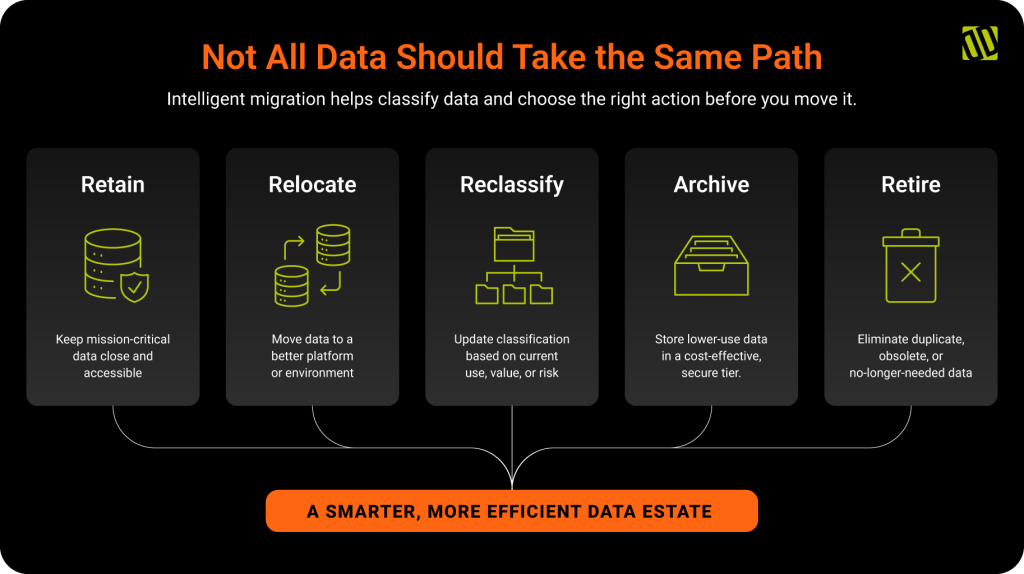
With that visibility, enterprises can classify unstructured data at scale based on factors such as age, access patterns, sensitivity, ownership, and other relevant criteria. Stakeholders can then make better decisions about whether specific datasets should be retained, relocated, reclassified, archived, or retired before migration begins.
Automation can help make the data migration process practical at enterprise scale. AI, predictive analytics, and policy-driven workflows can reduce manual effort, accelerate analysis, and help organizations apply decisions consistently across increasingly hybrid environments.
Turn Migration Into a Strategic Advantage
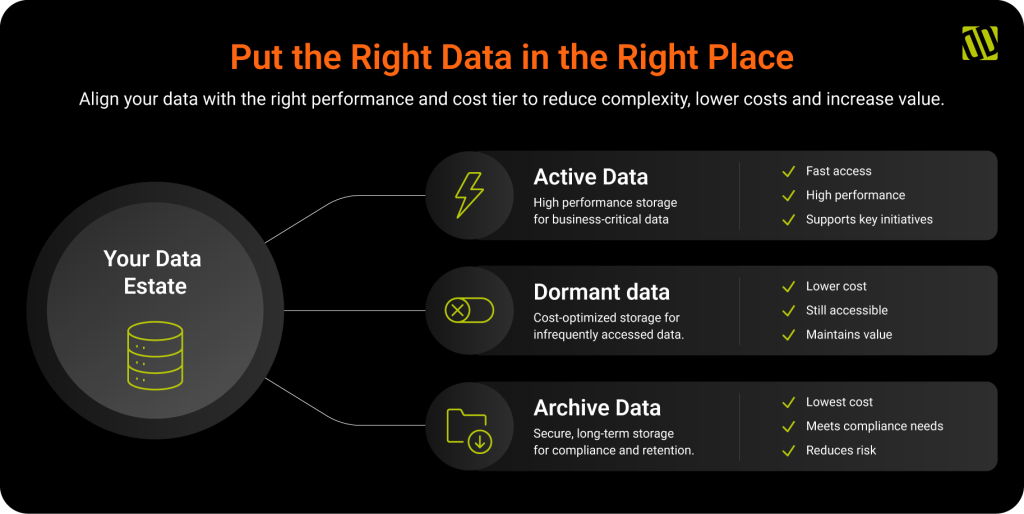
A more informed approach to migration can also help organizations optimize their storage infrastructure by aligning data with the appropriate performance and cost tier.
Data that is active and valuable can remain readily accessible, while dormant or non-business-critical information can be managed in a more cost-effective and secure location. Instead of simply recreating the same data estate on new infrastructure, migration becomes an opportunity to improve it.
The benefits can extend well beyond storage efficiency. High-quality, well-governed datasets can support more effective AI initiatives, help compliance teams respond more quickly to audits and regulatory requirements, and give business leaders greater confidence in the information used to make decisions.
Heterogeneous migration capabilities can also help enterprises move data across different storage and cloud platforms while applying consistent policies and controls. Just as importantly, lifecycle management helps keep those improvements in place by aligning data handling with business value over time so the right information is retained, archived, or deleted when appropriate.
The Result: Lower Costs, Higher Value
Organizations that approach migration this way are better positioned to realize meaningful financial and operational value.
The greatest benefits of data migration do not come from moving information from point A to point B as quickly as possible. They come from using migration as a decision point: understanding the data first, moving what belongs in the new environment, and putting the right policies in place for what happens next.
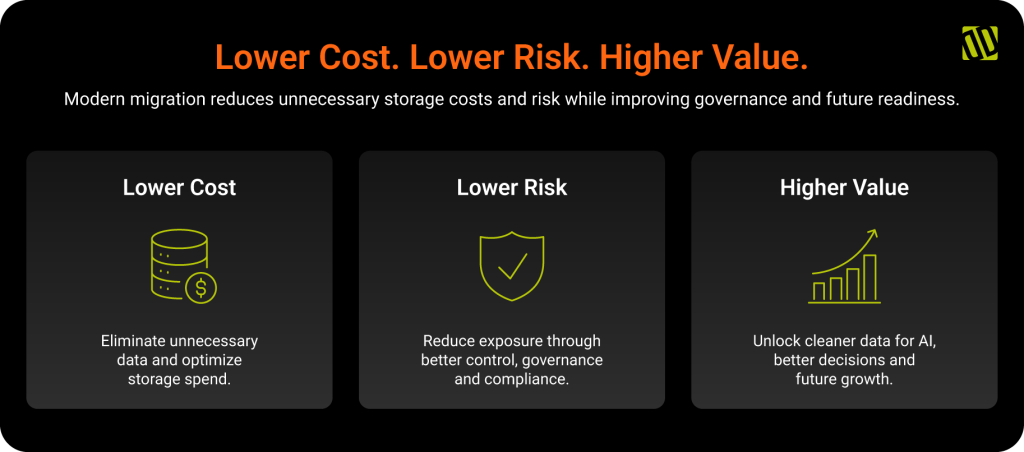
By combining insight, classification, automation, and lifecycle management with the technical movement of data, enterprises can reduce unnecessary storage costs and risk while creating a cleaner, better-governed foundation for future technology and business priorities.
Modern Storage Deserves a Modern Migration
View our infographic to see how a modern approach compares with traditional migration across storage efficiency, project speed, staffing, budget, and business disruption.